 Train - Calling All Angels
I need a sign, to that blonde girl from Bleecker Street, Red Lion Sat 12:34 we had a moment...
Out to LA
Train - Calling All Angels
I need a sign, to that blonde girl from Bleecker Street, Red Lion Sat 12:34 we had a moment...
Out to LA
 Radiohead - High and Dry
💙 For That Someone Who'll Know It's for Them “I'm not putting their name here because they'll know exactly who they are when they hear it!!!
Michelle
Radiohead - High and Dry
💙 For That Someone Who'll Know It's for Them “I'm not putting their name here because they'll know exactly who they are when they hear it!!!
Michelle
 Foo Fighters - Times Like These
🖤 For Anyone Having a Rough Week “To anybody who's had one of those weeks where nothing seems to go right...
Foo Fighters - Times Like These
🖤 For Anyone Having a Rough Week “To anybody who's had one of those weeks where nothing seems to go right...
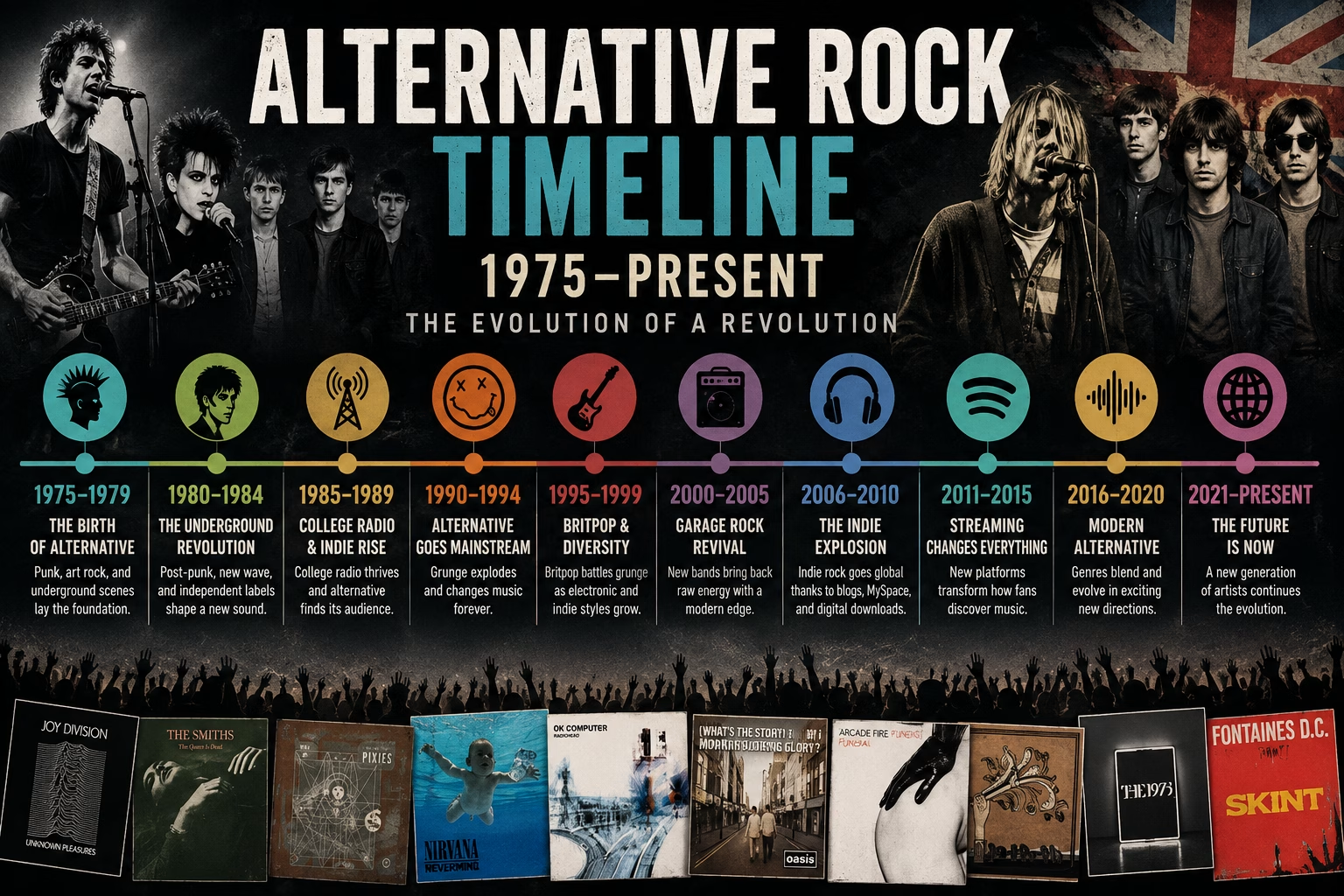
Alternative rock did not appear overnight. It grew in stages, from punk clubs in New York and London to college radio, Seattle, Britpop, the 2000s revival and today’s borderless streaming era. This timeline walks through each period with the moments, artists and albums that mattered most.
New to the genre? Start with our guide, What Is Alternative Rock?
| Years | Era | Defining artists |
|---|---|---|
| 1975–1979 | Punk and the birth of post-punk | Ramones, Sex Pistols, Talking Heads, Joy Division, The Cure |
| 1980–1984 | Post-punk, new wave and the underground | R.E.M., The Smiths, New Order, Depeche Mode, Echo & the Bunnymen |
| 1985–1990 | College radio and indie labels | Pixies, Sonic Youth, The Replacements, Jane’s Addiction |
| 1991–1994 | Alternative goes mainstream | Nirvana, Pearl Jam, Soundgarden, Smashing Pumpkins, Green Day |
| 1995–1999 | Britpop and diversification | Oasis, Blur, Radiohead, Foo Fighters, Weezer |
| 2000–2005 | Garage rock and post-punk revival | The Strokes, Interpol, Yeah Yeah Yeahs, The Killers |
| 2006–2010 | Blog-era indie | Arctic Monkeys, Arcade Fire, MGMT, The National |
| 2011–2019 | Streaming and genre-blending | The 1975, Twenty One Pilots, Tame Impala, The Midnight |
| 2020–today | A new guitar generation | Fontaines D.C., IDLES, Wet Leg, Turnstile, The Last Dinner Party |
Punk was the big bang. In New York, the Ramones, Television, Patti Smith and Talking Heads played CBGB. In London, the Sex Pistols, The Clash and Buzzcocks proved anyone could start a band. Just as important were the independent labels that followed, including Rough Trade and Factory, which made it possible to release records without a major label.
By 1978 and 1979, the most adventurous bands were already moving past punk’s three chords. This was post-punk: Joy Division, Wire, Gang of Four, Siouxsie and the Banshees, Public Image Ltd and The Cure.
Landmark albums: Ramones, Ramones (1976); Talking Heads, Talking Heads: 77 (1977); Wire, Pink Flag (1977); Joy Division, Unknown Pleasures (1979).
Synthesizers and drum machines entered the mix. After Ian Curtis’s death, Joy Division became New Order, and “Blue Monday” (1983) fused rock and dance music. Depeche Mode built electronic pop with a dark edge. Gothic and post-punk acts such as Lords of the New Church and Clan of Xymox added drama and atmosphere. See our guide to new wave vs. alternative rock.
In the U.S., R.E.M.’s Murmur (1983) and the hardcore and post-hardcore scenes of Black Flag, Hüsker Dü and Minutemen built a nationwide underground network.
Landmark albums: R.E.M., Murmur (1983); The Smiths, The Smiths (1984); Echo & the Bunnymen, Ocean Rain (1984); New Order, Power, Corruption & Lies (1983).
College radio became the main route to listeners, and the music became known as college rock. The Pixies, Sonic Youth, The Replacements, Dinosaur Jr. and Jane’s Addiction released era-defining records. In Britain, The Stone Roses and Happy Mondays launched the Madchester scene, while My Bloody Valentine pioneered shoegaze. Billboard launched its Modern Rock Tracks chart in 1988.
Landmark albums: The Smiths, The Queen Is Dead (1986); Sonic Youth, Daydream Nation (1988); Pixies, Doolittle (1989); The Cure, Disintegration (1989); The Stone Roses, The Stone Roses (1989).
The year 1991 changed everything. Lollapalooza toured for the first time, and Nirvana’s Nevermind, Pearl Jam’s Ten, Soundgarden’s Badmotorfinger, Red Hot Chili Peppers’ Blood Sugar Sex Magik and My Bloody Valentine’s Loveless all came out within months of each other. Read the full story in The Rise and Impact of Grunge Music.
Alternative rock became the dominant rock format, and Green Day‘s Dookie (1994) brought punk to a new generation. Kurt Cobain’s death in April 1994 marked the end of grunge’s peak.
Landmark albums: Nirvana, Nevermind (1991); Pearl Jam, Ten (1991); The Smashing Pumpkins, Siamese Dream (1993); Soundgarden, Superunknown (1994).
In the U.K., Oasis and Blur fought the “Battle of Britpop” in 1995. Our guide to the rise of Britpop covers the whole movement. In the U.S., Foo Fighters, Weezer, Beck and Garbage kept alternative radio busy, while Radiohead released OK Computer (1997), often called the most important album of the decade.
Landmark albums: Oasis, (What’s the Story) Morning Glory? (1995); Radiohead, OK Computer (1997); Foo Fighters, The Colour and the Shape (1997).
New York bands brought back lean guitars and cool attitude. The Strokes‘ Is This It (2001), Interpol‘s Turn On the Bright Lights (2002) and Yeah Yeah Yeahs‘ Fever to Tell (2003) led a revival that also included The White Stripes and The Black Keys. From Las Vegas, The Killers mixed post-punk with synth-pop on Hot Fuss (2004).
The internet changed discovery. Arctic Monkeys built a fan base online before their record-breaking 2006 debut. Arcade Fire, MGMT, Vampire Weekend, The National, Cold War Kids, The Airborne Toxic Event, White Lies and Florence + The Machine all broke through. Read The Evolution of Indie Rock for more.
Playlists replaced albums for many listeners, and genre walls fell. Synths came back in a big way through M83, Future Islands, Bastille, The 1975 and the synthwave of The Midnight. Twenty One Pilots blended alternative rock, hip-hop and electronic pop. Muse and Arctic Monkeys’ AM (2013) kept guitar rock big.
A new generation of post-punk and guitar bands, including Fontaines D.C., IDLES, Wet Leg, Turnstile, Wolf Alice, The Last Dinner Party and English Teacher, has brought energy back to alternative rock, while older bands such as Pearl Jam and The Cure have released acclaimed new albums. Emerging artists now break through on streaming, social media and independent radio. Follow the latest in our Emerging Alternative Top 20 and Modern Rock Top 20.
Each era on this timeline started the same way: musicians ignoring the mainstream and making something new. That cycle keeps alternative music alive, and it is why a station that plays Joy Division, Nirvana and this year’s breakout band in the same hour still makes sense.
Its roots go back to the punk and post-punk scenes of 1975 to 1979.
Commercially, the 1990s, when grunge, Britpop and alternative radio dominated rock.
R.E.M., The Cure, Pixies, Nirvana, Radiohead and The Strokes are frequently named as the most influential, each defining a different era.
Stream The Alternative One live, which mixes alternative classics with new and emerging artists 24 hours a day.
Every era on this timeline is part of our rotation, and that is the whole idea of The Alternative One. Catch it on The Modern Rock Radio Show, check the radio show schedule, or press play on the live stream. Want a specific song? Send a request or dedication.
About this article: Written and fact-checked by The Alternative One editorial team, the programmers and music writers behind the station’s on-air shows. Last reviewed October 2, 2026. Read our editorial standards or tell us about a correction.