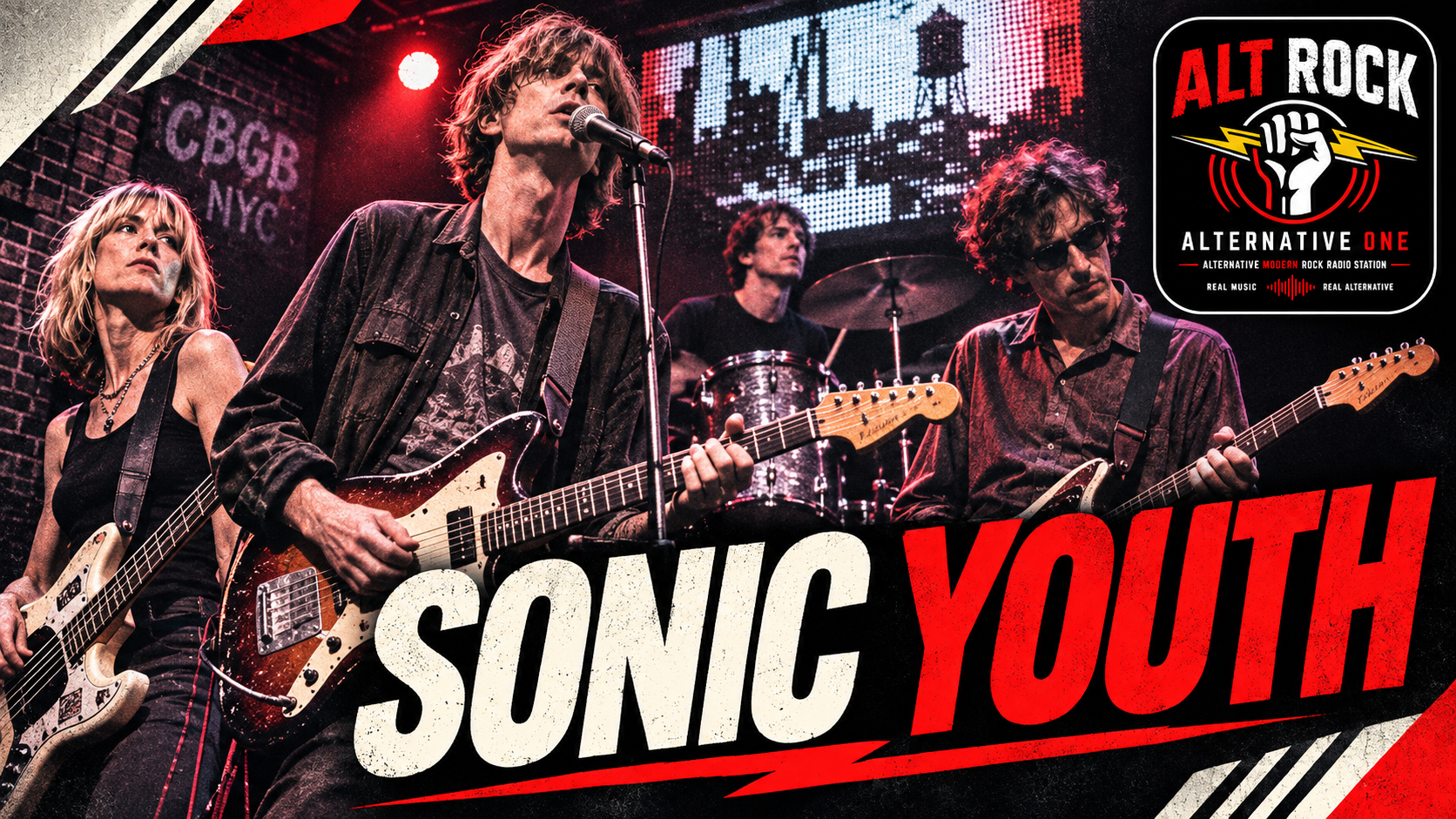
Sonic Youth turned noise, feedback and unusual guitar tunings into some of the most influential music in alternative rock. Formed in New York City in 1981 by Thurston Moore, Kim Gordon and Lee Ranaldo, and joined by drummer Steve Shelley in 1985, they moved from the downtown art scene to a major label without losing their experimental edge. They are a noise rock and alternative rock band, with indie rock and experimental rock influences.
Sonic Youth at a glance
| Formed | 1981, New York City, U.S. |
| Members | Thurston Moore (guitar, vocals), Kim Gordon (bass, guitar, vocals), Lee Ranaldo (guitar, vocals), Steve Shelley (drums, from 1985) |
| Active | 1981–2011 |
| Genres | Noise rock, alternative rock, indie rock, experimental rock |
| Labels | SST, Enigma, DGC/Geffen, Matador |
Formation
Moore, Gordon and Ranaldo came together in New York’s experimental and no wave scene of the early 1980s. After several drummers, Steve Shelley joined in 1985 and stayed until the end.
The sound
Sonic Youth retuned and sometimes modified their guitars to create clanging, chiming and droning sounds, then set them against punk energy and pop hooks. Their songs can swing from catchy to chaotic in a few bars, and the three vocalists gave each record different moods.
Kim Gordon and Thurston Moore
Gordon’s cool, spoken-sung vocals and Moore’s guitar work became the band’s signature. Gordon later told her story in the memoir Girl in a Band (2015), and all four members have continued to release music.
Legacy
Daydream Nation (1988) is regularly ranked among the greatest alternative albums, and the band’s move to DGC in 1990 helped open the major-label door for the alternative boom that followed, including their friends Nirvana.
Sonic Youth went on hiatus in 2011, after Moore and Gordon separated. Their influence runs through indie rock, noise and shoegaze to this day.
The albums
Confusion Is Sex (1983) to EVOL (1986)
Raw, noisy early records, including “Death Valley ’69”.
Sister (1987) and Daydream Nation (1988)
The band’s creative peak, with “Schizophrenia”, “Teen Age Riot” and “Silver Rocket”.
Goo (1990) and Dirty (1992)
Their major-label albums, featuring “Kool Thing” and “100%”.
Experimental Jet Set, Trash and No Star (1994) to A Thousand Leaves (1998)
More varied mid-period records, with “Bull in the Heather”.
Murray Street (2002) to The Eternal (2009)
Later albums including Sonic Nurse and Rather Ripped, with the melodic “Incinerate”.
Ten songs to start with
- Teen Age Riot
- Kool Thing
- Schizophrenia
- Silver Rocket
- 100%
- Bull in the Heather
- Death Valley ’69
- Expressway to Yr Skull
- Sugar Kane
- Incinerate
Songs we play on The Alternative One
These Sonic Youth songs are on our charts and lists:
- “Teen Age Riot”: one of the 100 best alternative rock songs of all time.
If you like Sonic Youth, try
Pixies, Nirvana, The Smashing Pumpkins, Dinosaur Jr., Pavement, Yo La Tengo and Yeah Yeah Yeahs.
Frequently asked questions
What genre is Sonic Youth?
Sonic Youth are a noise rock and alternative rock band, with indie rock and experimental rock influences.
Where are Sonic Youth from?
New York City. The band formed there in 1981.
What is Sonic Youth’s best album?
Daydream Nation (1988) is their most acclaimed album and a common pick for one of the greatest alternative records ever.
What is Sonic Youth’s most famous song?
“Teen Age Riot” (1988) and “Kool Thing” (1990) are their best-known songs.
Are Sonic Youth still together?
No. The band went on hiatus in 2011, and the members have continued with solo projects.
Hear it on The Alternative One
Sonic Youth bring the noisy, experimental side of alternative rock to our playlist. Catch it on The Modern Rock Radio Show, check the radio show schedule, or press play on the live stream. Want a specific song? Send a request or dedication.
About this article: Written and fact-checked by The Alternative One editorial team. Last reviewed November 4, 2026. Read our editorial standards or tell us about a correction.