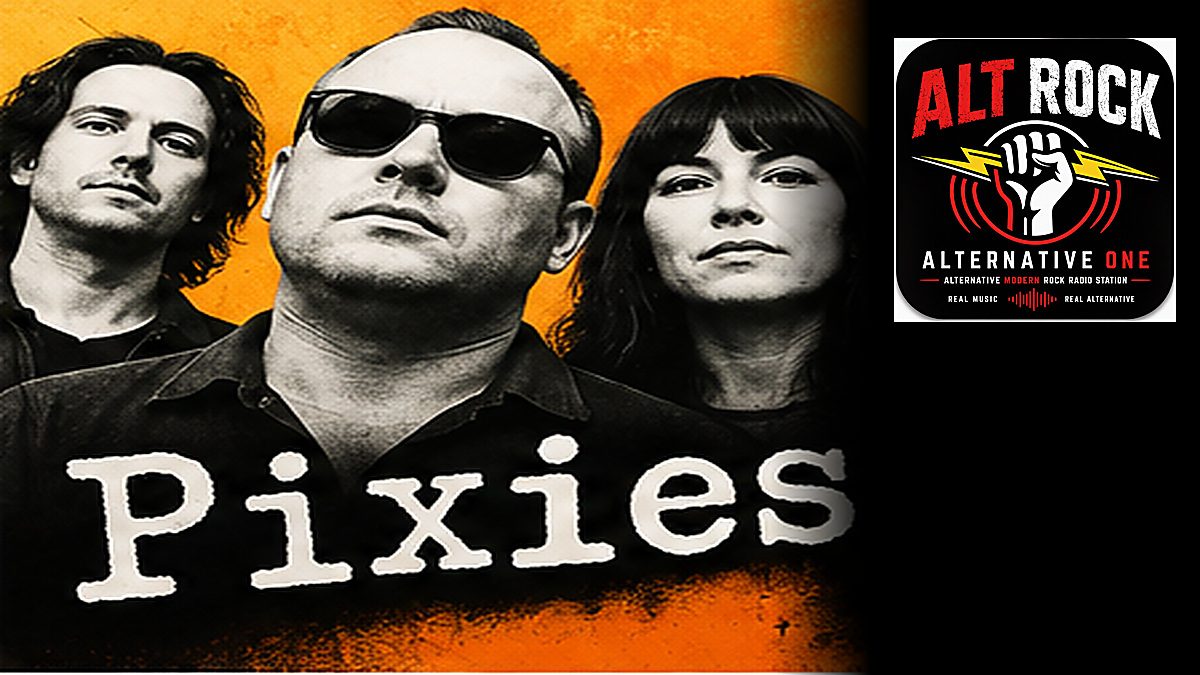
Pixies wrote the blueprint for the loud-quiet-loud dynamic that shaped 1990s alternative rock. Formed in Boston in 1986, Black Francis, Joey Santiago, Kim Deal and David Lovering mixed surf guitar, punk noise and pop hooks into something no one had heard before. They are an alternative rock and indie rock band with noise pop and punk roots, and after splitting in 1993 they reunited in 2004.
Pixies at a glance
| Formed | 1986, Boston, Massachusetts, U.S. |
| Original members | Black Francis (vocals, guitar), Joey Santiago (lead guitar), Kim Deal (bass, vocals), David Lovering (drums) |
| Current bassist | Emma Richardson (since 2024) |
| Active | 1986–1993, 2004–present |
| Genres | Alternative rock, indie rock, noise pop, punk rock |
| Label | 4AD (U.K. and early releases), Elektra (U.S.) |
Formation
Black Francis and Joey Santiago started the band in Boston in 1986, adding Kim Deal on bass and David Lovering on drums. Their first release, the mini-album Come On Pilgrim (1987) on 4AD, was followed a year later by the full-length Surfer Rosa.
The sound
Pixies songs swing between hushed, tense verses and explosive choruses. Black Francis’s yelps and strange, often surreal lyrics sit against Joey Santiago’s surf-tinged lead guitar and Kim Deal’s sweet backing vocals. The contrast between calm and chaos became one of the most copied ideas in alternative rock.
Black Francis and Kim Deal
Black Francis (also known as Frank Black) wrote most of the band’s songs, while Kim Deal’s harmonies and basslines gave Pixies much of their warmth. Deal left in 2013 during the reunion era, and Paz Lenchantin and later Emma Richardson took over bass.
Legacy
Pixies never had huge hits in their first run, but their influence was enormous. Their loud-quiet-loud dynamics are often cited as a direct influence on the grunge and alternative bands that broke through in the early 1990s.
Since reuniting in 2004 they have kept recording and touring, releasing albums from Indie Cindy (2014) to The Night the Zombies Came (2024).
The albums
Come On Pilgrim (1987) and Surfer Rosa (1988)
A raw introduction, then a full-length album with “Where Is My Mind?” and “Gigantic”.
Doolittle (1989)
The classic, with “Debaser”, “Monkey Gone to Heaven” and “Here Comes Your Man”.
Bossanova (1990) and Trompe le Monde (1991)
Spacier and heavier records, featuring “Velouria” and “Dig for Fire”, before the 1993 split.
Indie Cindy (2014) to The Night the Zombies Came (2024)
The reunion albums: Indie Cindy, Head Carrier, Beneath the Eyrie, Doggerel and The Night the Zombies Came.
Ten songs to start with
- Where Is My Mind?
- Debaser
- Monkey Gone to Heaven
- Here Comes Your Man
- Gigantic
- Wave of Mutilation
- Hey
- Velouria
- Dig for Fire
- Bone Machine
Songs we play on The Alternative One
These Pixies songs are on our charts and lists:
- “Where Is My Mind?” and “Debaser”: both are among the 100 best alternative rock songs of all time.
If you like Pixies, try
Nirvana, Sonic Youth, R.E.M., The Breeders, Weezer and Radiohead.
Frequently asked questions
What genre is Pixies?
Pixies are an alternative rock and indie rock band, with noise pop and punk rock influences.
Where are Pixies from?
Boston, Massachusetts. The band formed there in 1986.
Who sings for Pixies?
Black Francis (also known as Frank Black) is the lead singer. Kim Deal sang backing and occasional lead vocals until 2013.
What is the most famous Pixies song?
“Where Is My Mind?” from Surfer Rosa (1988) is their best-known song.
Are Pixies still together?
Yes. They split in 1993, reunited in 2004 and released The Night the Zombies Came in 2024.
Hear it on The Alternative One
Pixies are one of the bands every alternative fan should know. Catch it on The Modern Rock Radio Show, check the radio show schedule, or press play on the live stream. Want a specific song? Send a request or dedication.
About this article: Written and fact-checked by The Alternative One editorial team. Official artist website: pixiesmusic.com. Last reviewed November 4, 2026. Read our editorial standards or tell us about a correction.