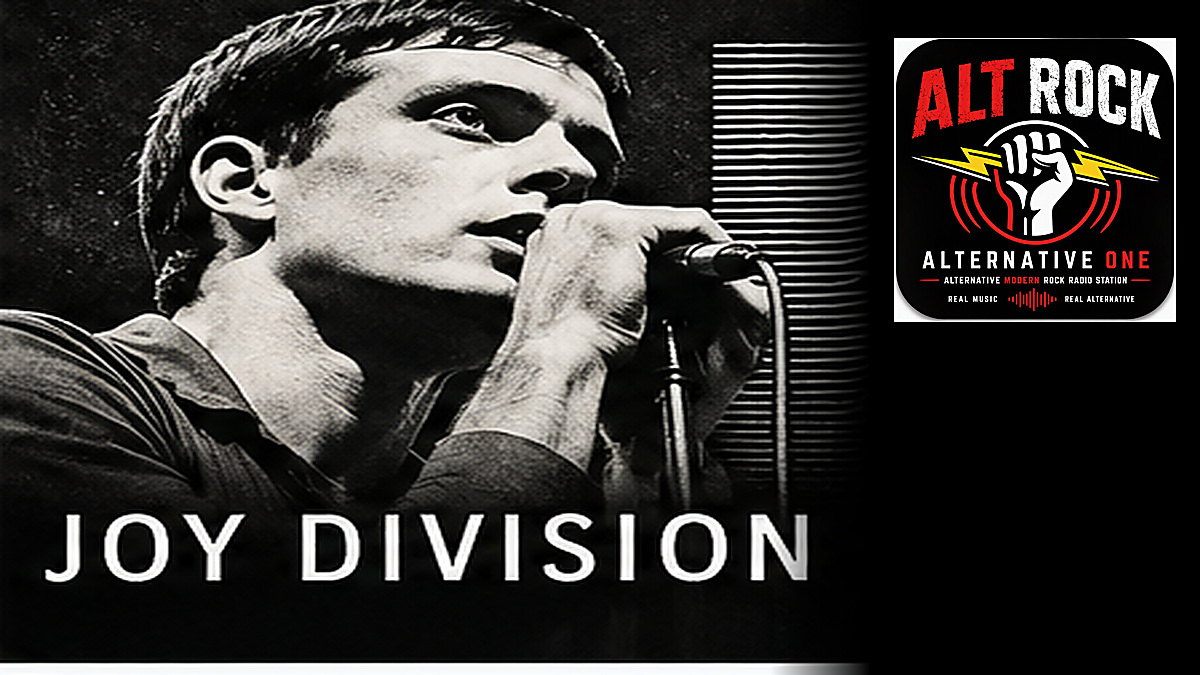
Joy Division made only two studio albums, but they changed the sound of alternative music. Formed in Salford, near Manchester, in 1976, Ian Curtis, Bernard Sumner, Peter Hook and Stephen Morris turned punk’s energy into something colder, darker and more atmospheric. They are a post-punk band, with gothic rock and new wave influences, and after Curtis died in 1980 the surviving members formed New Order.
Joy Division at a glance
| Formed | 1976, Salford, England (first called Warsaw) |
| Members | Ian Curtis (vocals), Bernard Sumner (guitar, keyboards), Peter Hook (bass), Stephen Morris (drums) |
| Active | 1976–1980 |
| Genres | Post-punk, gothic rock, new wave |
| Label | Factory Records |
| Afterward | Surviving members formed New Order with Gillian Gilbert |
Formation
The band began in the Manchester punk scene of 1976 and first performed as Warsaw before becoming Joy Division in early 1978. They signed to Factory Records, the Manchester independent label that released both of their studio albums.
The sound
Joy Division stripped rock down to tense, spacious parts: Peter Hook’s melodic, high bass lines, Stephen Morris’s precise drumming, Bernard Sumner’s sharp guitar and Ian Curtis’s deep, haunted voice. The result was colder and more atmospheric than punk, and it became one of the defining sounds of post-punk.
Ian Curtis
Curtis wrote the band’s lyrics, which explore isolation, struggle and emotional pain with unusual directness. He died in May 1980, on the eve of the band’s first planned North American tour, and Joy Division ended with him.
Legacy
Joy Division’s influence on alternative, gothic and indie music is hard to overstate. Their sound runs through the post-punk revival of the 2000s and bands like Interpol, and “Love Will Tear Us Apart” remains one of the most loved songs of its era.
The surviving members carried on as New Order, moving toward electronic dance music and becoming one of the most important bands of the 1980s in their own right.
The albums
Unknown Pleasures (1979)
The debut, with its famous waveform cover, and songs including “Disorder”, “Shadowplay” and “She”.
Closer (1980)
The second and final studio album, released after Curtis’s death.
Singles and compilations
Key singles such as “Transmission” (1979) and “Love Will Tear Us Apart” (1980) were released separately from the albums and are essential listening.
Ten songs to start with
- Love Will Tear Us Apart
- Transmission
- Disorder
- She’s Lost Control
- Shadowplay
- Atmosphere
- Isolation
- Dead Souls
- Digital
- New Dawn Fades
Songs we play on The Alternative One
These Joy Division songs are on our charts and lists:
- “Love Will Tear Us Apart”: No. 1 in our list of the 100 best alternative rock songs of all time, which opens with the 1980s.
If you like Joy Division, try
New Order, The Cure, Interpol, Siouxsie and the Banshees, Echo & the Bunnymen and Fontaines D.C..
Frequently asked questions
What genre is Joy Division?
Joy Division are a post-punk band, with gothic rock and new wave influences.
Where are Joy Division from?
Salford, near Manchester, England. They formed there in 1976.
What happened to Joy Division?
Singer Ian Curtis died in May 1980, and the band ended. The surviving members formed New Order.
What is Joy Division’s most famous song?
“Love Will Tear Us Apart” (1980).
How many albums did Joy Division release?
Two studio albums: Unknown Pleasures (1979) and Closer (1980).
Hear it on The Alternative One
Joy Division are where much of our post-punk and darkwave programming begins. Catch it on The Modern Rock Radio Show, check the radio show schedule, or press play on the live stream. Want a specific song? Send a request or dedication.
About this article: Written and fact-checked by The Alternative One editorial team. Last reviewed November 4, 2026. Read our editorial standards or tell us about a correction.